

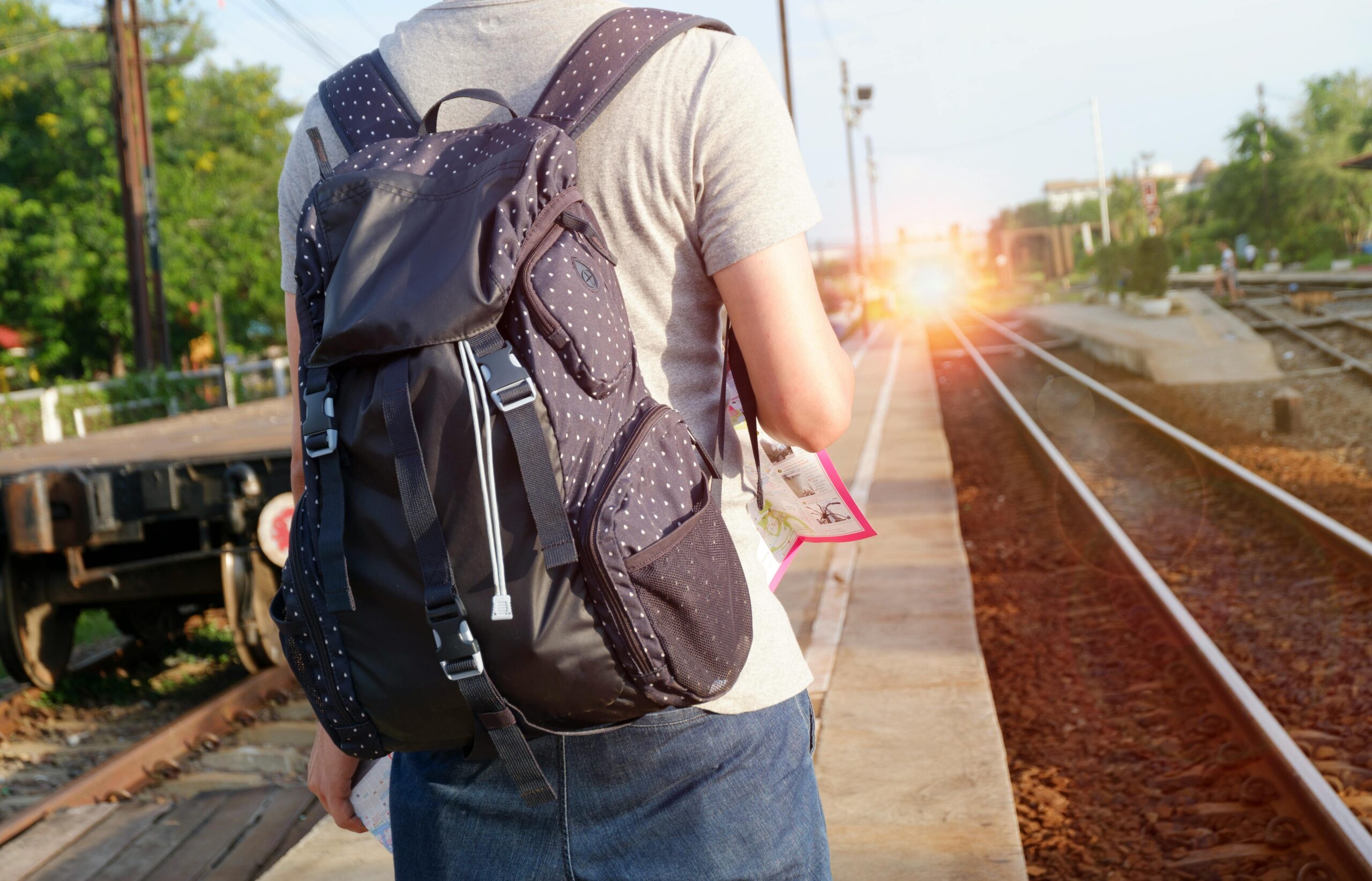
Solo travel sounds romantic until you actually do it.
In photos it looks easy: a small suitcase, a train window, a coffee on a sunny terrace, some old street in Lisbon or Prague where the light lands perfectly on the stones. People write captions about freedom. They say they “found themselves.” They make it look clean.
Real solo travel is not always clean.
Sometimes it is standing outside a restaurant, pretending to read the menu, while really asking yourself whether you can handle saying, “Table for one, please.” Sometimes it is going back to your room at 8:40 p.m. because you walked too much and suddenly the city feels louder than it did in the afternoon. Sometimes it is seeing something ridiculous — a dog in a raincoat, a man singing badly near the metro, a sunset that looks almost fake — and turning your head to share it with someone who is not there.
That small turn of the head can sting.
For LGBTQ+ travelers, being alone on the road can carry a second layer. There is the normal travel checklist: passport, charger, bank card, medication, room key, transport app, hotel address saved offline. Then there is the other list, the one you do quietly and quickly.
Is this neighborhood safe after dark?
Can I mention my partner?
Is this bar actually queer-friendly, or does it just have a rainbow sticker because tourists like that?
Will I feel comfortable being read as myself here?
That may sound dramatic to people who never have to think about it. It is not dramatic. It is ordinary risk-reading. Most LGBTQ+ travelers are not walking around afraid of every corner. They are just paying attention. To tone. To streets. To how people look at them. To how hotel staff speak. To which parts of themselves feel easy in a place, and which parts become careful.
Still, solo travel can be wonderfully freeing. A new city does not know your old story. Nobody at the café knows your family, your first awkward coming-out conversation, the person who broke your heart, the version of yourself you had to perform at work, at school, or at home. You can arrive almost blank. Not empty — just unclaimed.
That is one of travel’s quiet gifts.
But blank space gets lonely at night.
This is why connection matters. Not constant company. Not forcing yourself into loud bars or group tours every evening just to prove that you are “doing” travel correctly. Just enough human warmth to stop the trip from folding inward.
Connections can be small. A voice note from a friend back home. A message that says, “Send me a photo when you get there.” A queer walking tour where you speak to two people and never see them again. A bookstore with a shelf that makes you feel less strange. A café where nobody looks twice. A bartender who tells you, kindly, that the place you planned to visit is overrated and you should go two streets over.
Tiny things, yes. But tiny things change the mood of a city.
Phones are part of this now. That is not a moral failure; it is just how travel works. The same device holds your boarding pass, maps, translation app, bank card, hotel booking, photos, emergency contacts, dating apps, and messages from home. Of course it also holds comfort.
For some LGBTQ+ travelers, private digital spaces become part of the emotional luggage. Not the whole trip. Not a replacement for the street outside. But a place to talk, flirt, reflect, or feel seen for a while when the evening is too quiet. A platform such as https://joi.com/characters/gay fits into that wider shift toward more personal digital companionship for queer users who want a private kind of connection while away from home.
The key question is simple: does the screen help you return to the world, or does it help you hide from it?
A message from home can steady you before you go out. A queer travel forum can help you find safer places. A private chat can soften a lonely hour. But if every night ends inside the phone because the outside world feels too unpredictable, something has changed. Rest is fine. Hiding is different.
The bigger picture is hard to ignore. In 2025, the World Health Organization reported that one in six people worldwide is affected by loneliness, and linked social disconnection to more than 871,000 deaths each year. That number sounds enormous, almost abstract, until you reduce it to one person eating alone, one person not saying what they really feel, one person opening an app because silence has become too heavy.
Younger people are already building emotional habits around digital tools. Common Sense Media reported in 2025 that 72% of U.S. teens had used AI companions, while more than half used them at least a few times a month. About one in three used them for social or relationship reasons, including emotional support, friendship, role-play, romance, or conversation practice. Pew Research Center reported in 2026 that 12% of U.S. teens had used AI chatbots for emotional support or advice. A JAMA Network Open study found that 13.1% of U.S. youth aged 12 to 21 had used generative AI for mental health advice; among those users, 65.5% engaged at least monthly and 92.7% found the advice helpful.
Those are not travel numbers. But they explain the world travelers are living in. Emotional support is becoming portable. People carry loneliness, identity, flirtation, anxiety, safety planning, and comfort in the same pocket as their boarding pass.
Think of Nico, twenty-nine, traveling alone in Madrid after a breakup. During the day, he is almost proud of himself. He walks too far, eats late, changes plans twice, gets lost near a market and decides that getting lost counts as a plan. Nobody asks what he wants to do next. Nobody is disappointed. It feels good.
Then evening comes. Couples fill the outdoor tables. Groups laugh too loudly. Everyone seems to belong to someone. Nico goes back to his room, lies on the bed “for ten minutes,” and feels the mood drop.
He could stay there. He almost does. Instead, he checks a queer event page he saved before the trip and finds a small film screening. He argues with himself for fifteen minutes. Then he goes.
Nothing cinematic happens. No romance. No new best friend. After the film, he talks with two people about the neighborhood and the director. That is it. But on the walk back, Madrid feels less like a city he is watching from behind glass.
That counts.
Or take Mara, who travels very differently. She does not like clubs. She does not want to turn every trip into a networking exercise. In Amsterdam, her comfort is quieter: museums in the morning, a long walk after lunch, one good meal, one message to her best friend, and a queer-owned café saved on her map. She only visits it once. Still, knowing it exists makes the city feel softer.
That counts too.
There is no correct way to travel as an LGBTQ+ person. Some people want nightlife. Some want nature. Some want romance. Some want silence, galleries, and early sleep. Some are visibly out everywhere they go. Others choose privacy in certain countries, cities, or situations, not because they are ashamed, but because they understand the difference between courage and unnecessary risk.
Comfort is personal. Safety is personal. Connection is personal.
| Situation on the road | What to try | Why it helps |
| You feel lonely after sightseeing | Plan one small evening anchor: a café, walk, food market, film, or bookstore | The day does not fall straight into an empty room |
| You are unsure how queer-friendly a place is | Read recent local guides and current traveler reviews | Old advice can be wrong; the mood of a place changes |
| You want company but hate forced mingling | Try structured activities like walking tours, museum nights, or cooking classes | Conversation is easier when there is something to do |
| You are meeting someone from an app | Meet in public, control your way home, tell someone your plan | Excitement should not cancel basic safety |
| You miss home | Send one daily photo or voice note to someone you trust | Small routines keep you emotionally anchored |
| You feel overwhelmed | Stay in without guilt, but be honest about why | Rest helps; repeated avoidance usually does not |
| You want queer community | Look for cafés, bookstores, local groups, low-key events, or community spaces | Queer connection does not have to mean clubs or dating |
One of the hardest travel skills is knowing when to push yourself and when to stop. Some nights, going out for one hour is exactly what you need. Other nights, the right answer is snacks, a shower, and sleep. You do not have to earn your trip by being interesting every minute.
LGBTQ+ travelers often get very good at noticing danger. That skill is useful. It can also become tiring. So notice comfort too. Notice where your shoulders drop. Notice the café where the staff are relaxed. Notice the street where you stop editing your walk, your voice, your clothes. Notice the person who treats your life as normal without making a performance of it.
Traveling alone is not about proving you need nobody. That is the cold version of freedom. The better version is learning what kind of connection actually suits you.
Maybe it is one friend back home. Maybe it is one conversation with a stranger. Maybe it is a queer neighborhood, a private digital chat, a familiar playlist, a safe room, or a morning walk where nobody expects anything from you.
The road will not magically fix loneliness. Sometimes it makes loneliness louder. But it can teach something useful: you can be alone without being abandoned. You can be careful without being closed. You can use digital tools without letting them replace the city outside your door.
Sometimes that is enough. One message. One walk. One friendly place. One small decision to step outside again tomorrow.